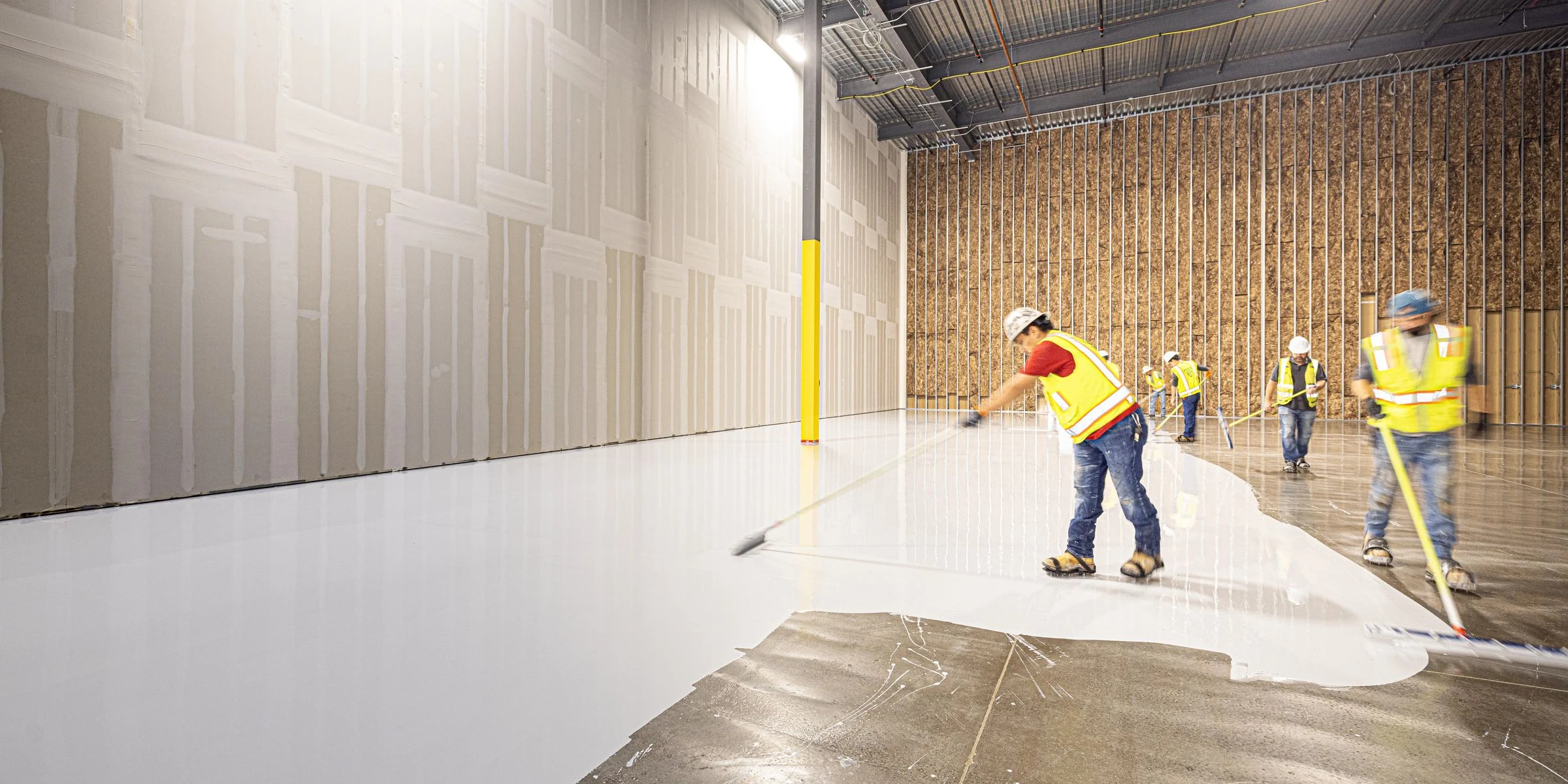
Slab condition
Cracks, and what
we do about them.
Nearly every concrete slab has cracks. Most of them are cosmetic and get repaired as routine. A few are telling you something you need to hear before you spend money.
“Can you coat over a cracked floor?” is the most common question we get, and the answer is almost always yes — but which kind of crack it is decides whether the repair lasts.
The three things you’re probably looking at
Shrinkage cracks
Concrete shrinks as it cures and cracks where it needs to. These are usually thin, wandering, and stable — they happened early and they’ve stopped. They fill, grind flush, and disappear under a flake floor completely.
Control joints
The straight saw-cut lines someone put there on purpose, so the slab cracks where they chose rather than where it wanted to. These aren’t damage. They’re a design feature, and they still move a little with temperature.
You get a choice: fill and coat over them for a seamless look, accepting that a fine line may eventually telegraph through, or honour the joint and keep it as a deliberate detail. We’ll ask which you’d rather have.
Moving cracks
The ones that matter. Signs are a height difference between the two sides, edges that are crumbling rather than clean, a crack that’s visibly wider at one end, or one that comes back after being filled. These usually mean soil movement, settlement, or something structural.
A coating will not hold a moving crack together. It will crack again, in the same place, and the new coating will look worse than the bare concrete did because the failure line is now framed by something glossy.
How the repairs actually get done
Repairs need sound, clean concrete and a compatible repair material. The sequence of repairs and diamond grinding or shot blasting follows the selected products and slab conditions. Grinding a cured repair flush is a separate finishing operation, not a reason to substitute blasting.
- Cracks get chased out to a consistent width so the filler has something to grip, then filled with a rigid repair resin and ground flush.
- Spalls and pits — the shallow craters where the surface has broken away — get filled and levelled the same way.
- Pop-outs and anchor holes from old shelving get filled.
- Damaged edges at the garage door are rebuilt so there’s a clean line to coat to. This is fiddly hand work and it’s where a floor either looks finished or doesn’t.
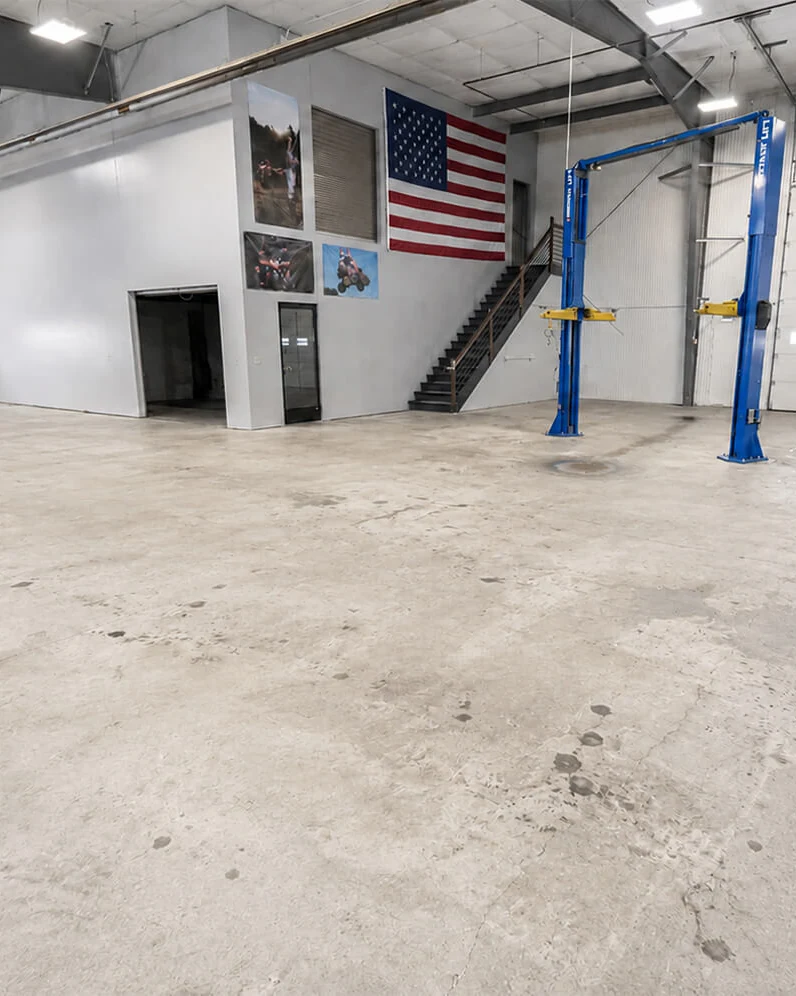
Will I still see them?
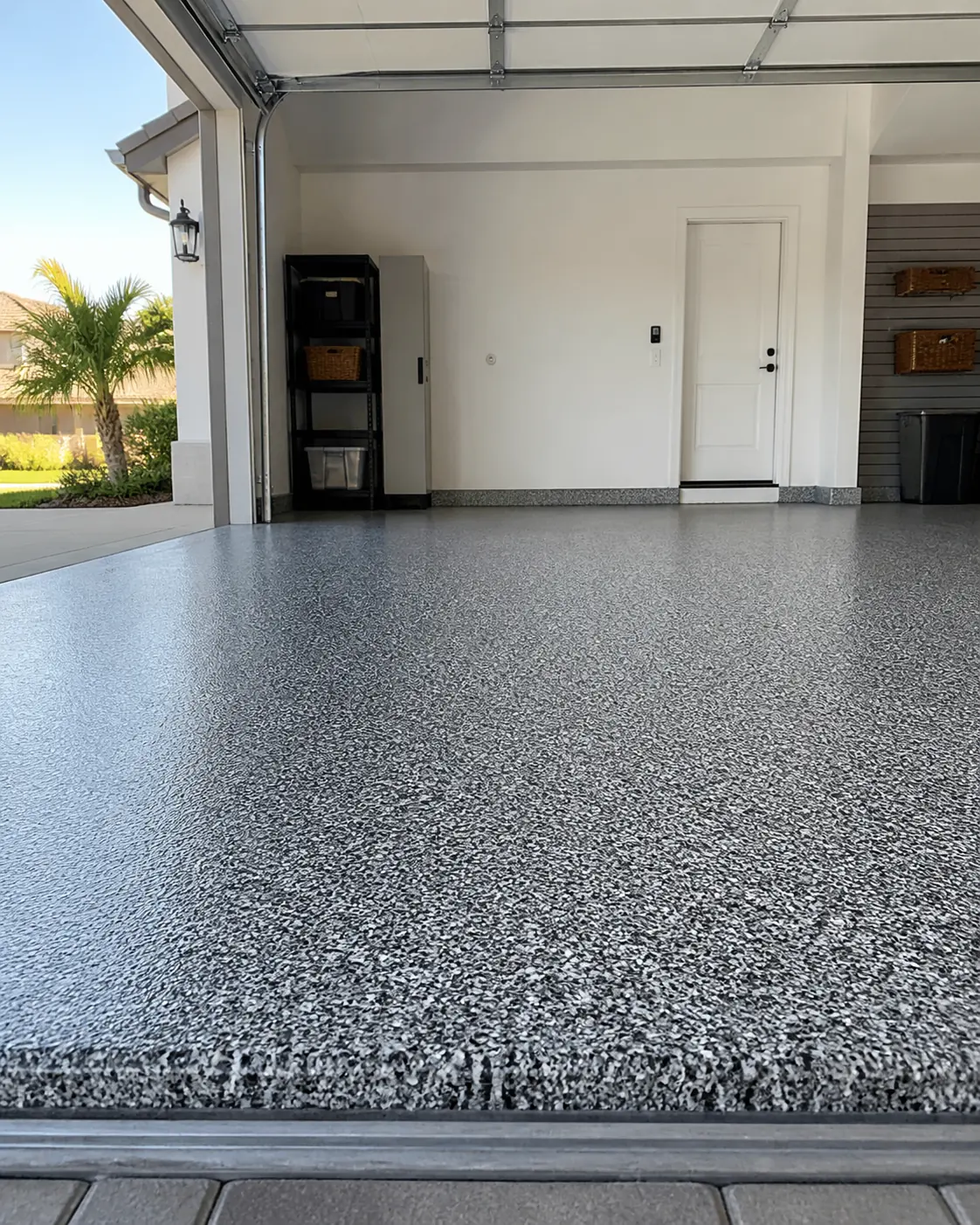
On a flake floor, almost never. The speckle is remarkably good at hiding a flush repair — you generally cannot find the crack afterwards even knowing where it was.
On a solid color or a metallic, be more realistic. Those are uniform, glossy surfaces and a repair can read as a faint line under the right light. If your slab has a lot of history and you want a flawless-looking floor, flake is the honest recommendation.
When we’ll tell you to stop
If we see displacement between the two sides of a crack, a crack that runs the length of the slab and keeps opening, or damage that suggests the ground underneath has moved, the right advice is to get the cause looked at before coating anything. That’s not us being difficult — it’s that a coating over an active structural problem is money spent hiding the evidence.