Garage floors · Inland Empire
Garage floors
that stay put.
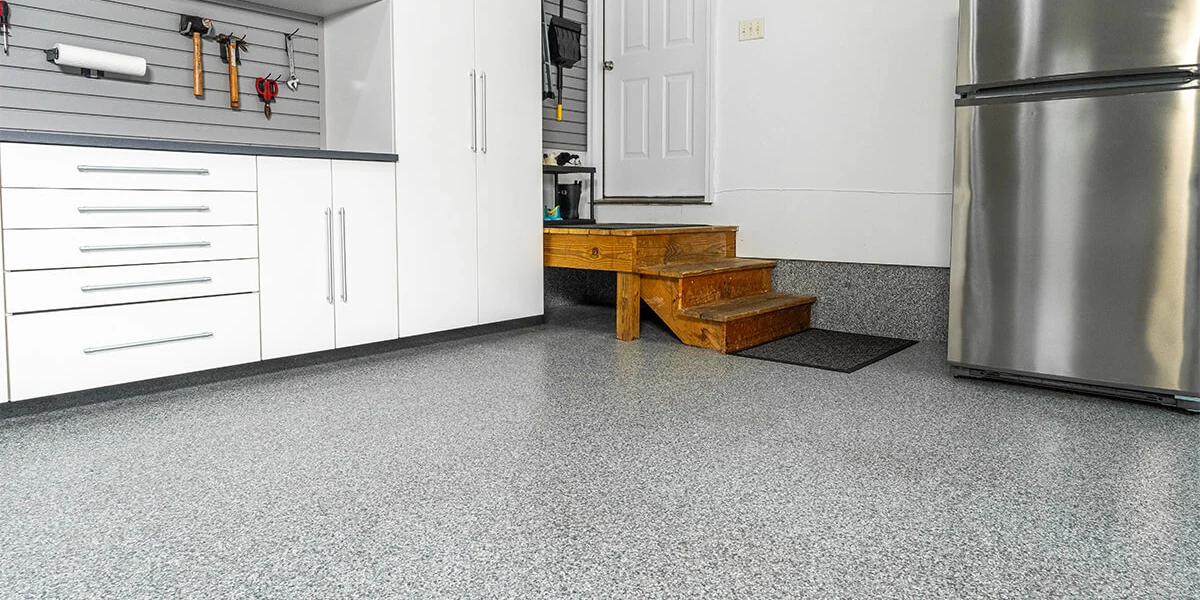
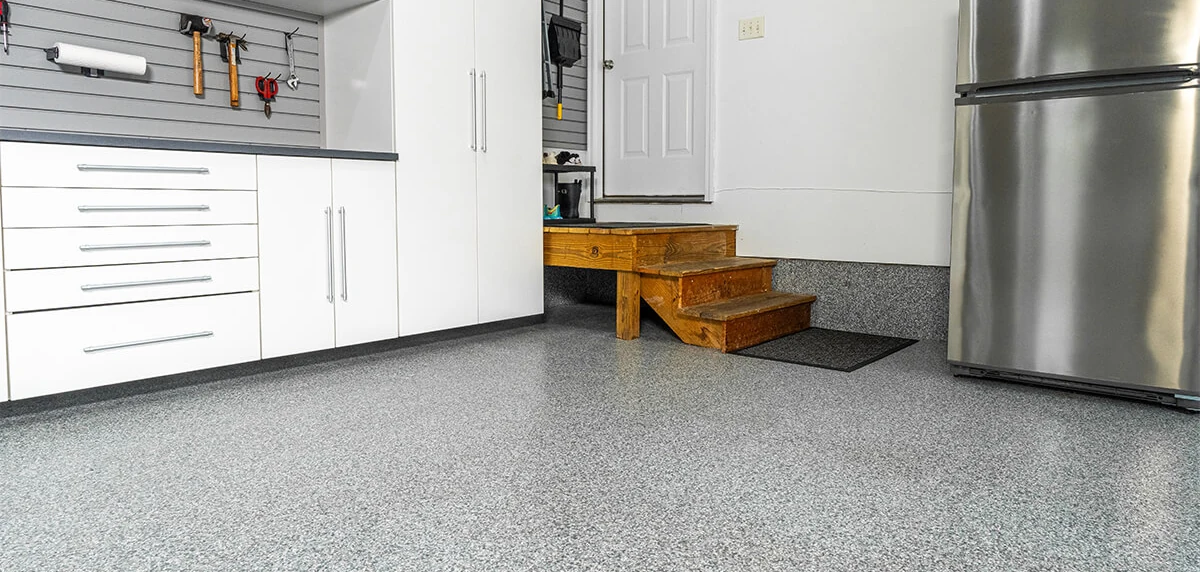
A properly prepared flake system for the room you actually use every day — brighter, easy to sweep, and planned around your concrete.
Drag the slider.
That’s the whole pitch.
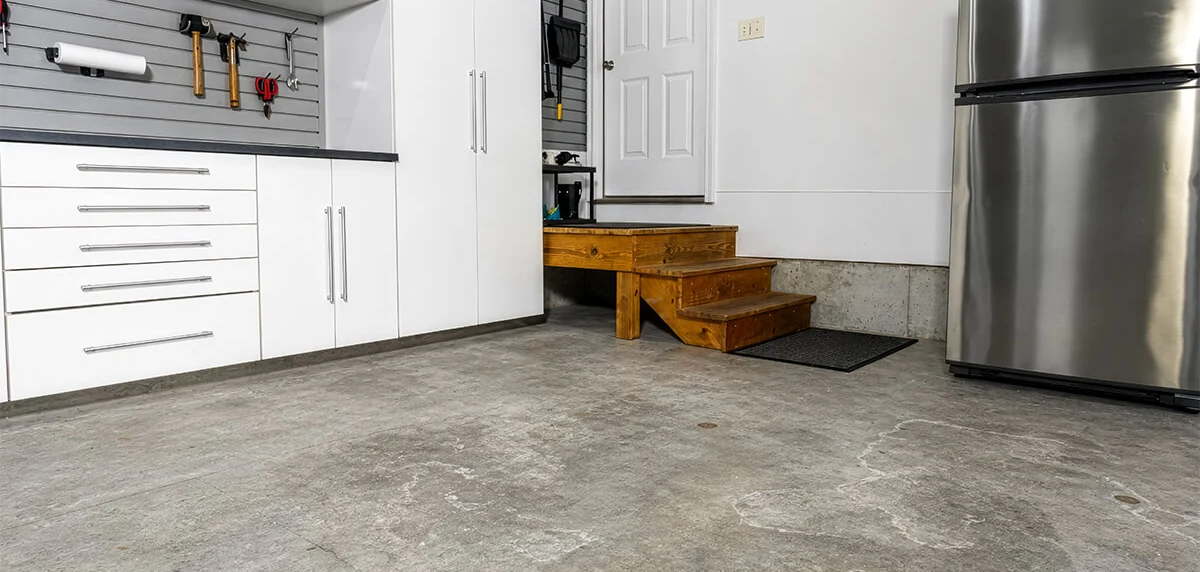
 Before
After
Before
After
It’s a system, not a coat of paint.
Floor paint is one product in one pass. What we install is a stack, and each layer is doing a different job. Skip one and the whole thing is only as good as the weakest part — which is usually why the last one failed.
Polyaspartic and polyurethane topcoats are options within compatible systems, not interchangeable labels. Moisture testing may also identify a need for a specified moisture vapor mitigation layer before the decorative coats.
Why coatings peel-
01
Diamond grinding or shot blasting
Mechanical preparation creates the concrete surface profile the selected coating requires. The method depends on the slab, system and access.
-
02
Crack & spall repair
Cracks, pits and chipped edges get filled and ground flush before anything goes over them.
-
03
Pigmented base coat
The color layer, rolled while the concrete is still clean and open.
-
04
Full flake broadcast
Vinyl chips thrown into the wet base until the floor rejects any more. Full coverage, no thin patches.
-
05
Scrape and vacuum
The loose chip gets knocked back and removed so the surface is flat rather than gritty.
-
06
Polyaspartic or polyurethane topcoat
A compatible wear coat selected for the system, sunlight, sheen and use. Performance and cure times depend on the specified product, not the resin name alone.
Three steps. That’s it.
- 01
We sit down and plan it
Free consultation. We test for moisture and work out which design and product suit how you actually use the space.
- 02
We do the prep properly
Diamond grinding or shot blasting creates the profile the system requires. Repairs, contamination and moisture concerns are addressed before coating.
- 03
We hand back something you’re proud of
Your specified system may include a compatible polyaspartic or polyurethane topcoat. We explain cure times and care before handing it back.
Common questions
Is a garage floor coating the same thing as garage floor paint?
How long does a garage floor take?
Will it fix the cracks in my concrete?
How do you prepare the slab?
Can you coat over an existing epoxy floor?
What colors can I get?
Tell us about your garage.
Takes about a minute. We'll call you back and set up the next step.
- No pressure — ever.
- We’ll tell you straight if your slab is a good candidate.
- A simple, clear process from first call to finished floor.