How it works
Eight stages,
no mysteries.
The whole thing, in order, including the parts that are inconvenient.
-
01
The visit
We come out, measure, and look at the slab properly — cracks, old coatings, oil, how the water runs, where the sun hits. You get told what it needs and what it doesn’t. No charge, and no obligation to book anything.
-
02
The written price
Everything goes on paper before we touch the floor: the system, the prep, what’s included, what isn’t, and how long you’ll be out of the space. If something changes once we’re diamond grinding or shot blasting, you hear about it before we carry on, not on the invoice.
-
03
Moving day
The floor has to be empty. We’ll tell you exactly how empty and how long before. Anything mounted to the wall can usually stay; anything on the floor cannot.
-
04
Profiling the slab
Diamond grinding or shot blasting prepares sound concrete to the surface profile the specified system requires. Grinding uses abrasive tooling; shot blasting propels and recovers steel shot to texture the surface. The choice depends on the coating, concrete condition and access — not a rule that every floor gets both. Dust collection and detailed edge work are part of the preparation plan.
-
05
Crack and spall repair
Cracks get chased out to a consistent width so the filler has something to grip. Divots, pits, spalled edges and old anchor holes get filled with a rigid repair resin and ground flush as the repair specification requires. Repair areas must be clean and sound; the sequence of repairs and final profiling follows the compatible system instructions.
-
06
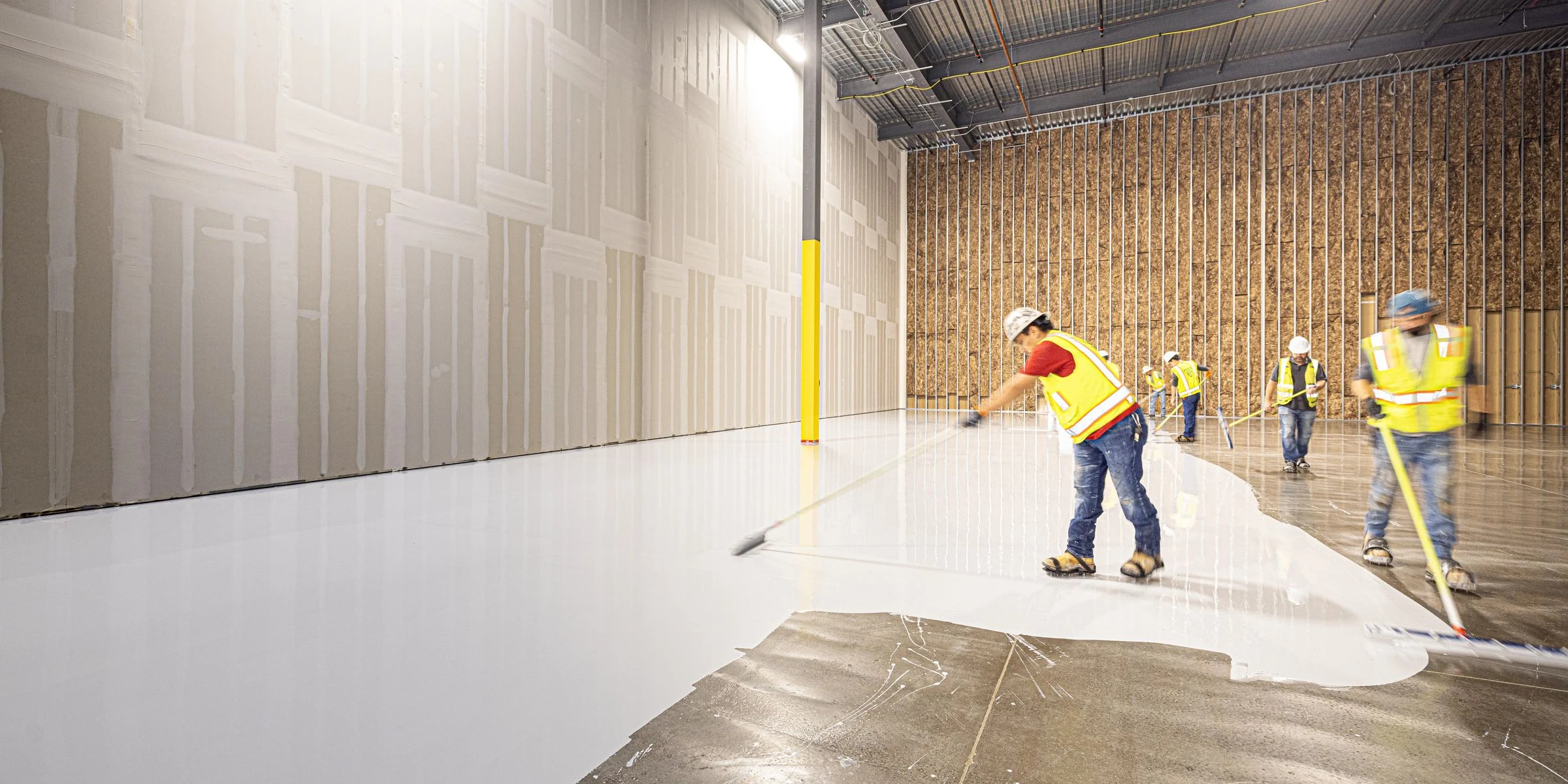
Base coat and flake
If testing and product limits require it, an approved moisture vapor mitigation layer is installed first on a suitable slab. Then the specified base coat and full flake broadcast build the decorative finish. Active water problems must be resolved, not buried.
-
07
Scrape and topcoat
Loose chip gets knocked back and vacuumed so the surface is flat rather than sharp, then the specified clear wear coat goes on. Polyaspartic or polyurethane topcoats may be selected for a compatible system; sheen, UV exposure, traffic and maintenance guide that choice.
-
08
Cure, then keys back
Foot traffic and vehicles come back at different times, and we’ll give you both in writing along with how to clean it. Then we’re gone and you have your garage back.
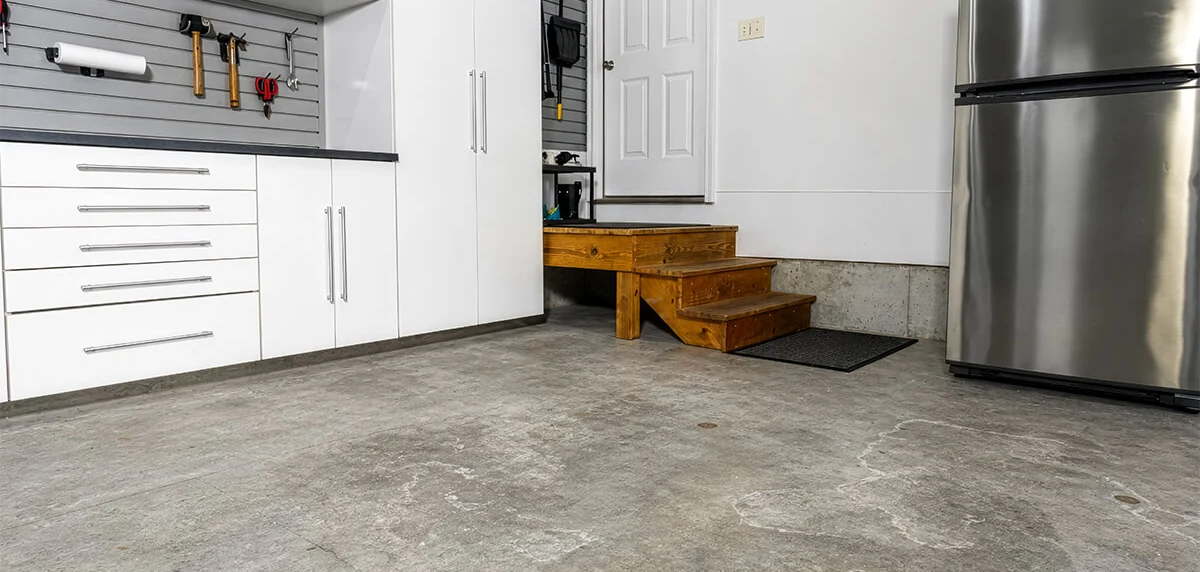
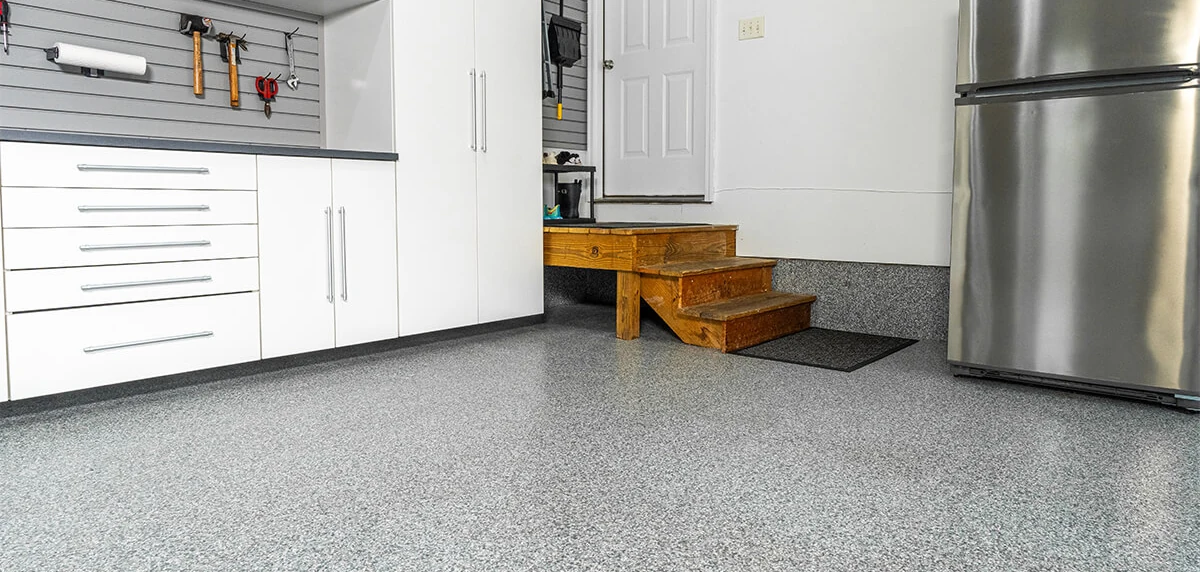
Eight stages,
one afternoon of difference.
The whole process exists to make this hold up for years instead of months.
 Before
After
Before
After
Common questions
How long will I be out of my garage?
Do I need to be home?
What do I need to move?
How much dust does grinding or shot blasting make?
What if you find something bad once you start?

Start with the free consultation.
Takes about a minute. We'll call you back and set up the next step.
- No pressure — ever.
- We’ll tell you straight if your slab is a good candidate.
- A simple, clear process from first call to finished floor.