Slab condition
Moisture testing,
before the coating.
The floor can look dry and still need a different plan. Moisture readings, the condition of the slab and the selected system’s technical requirements decide what happens next.
Concrete holds and transmits moisture. Too much moisture for the selected flooring system can contribute to blistering, loss of adhesion and other failures. A dry surface, the age of the concrete or a sunny week does not establish that it is ready to coat.
What concrete moisture tests measure
- ASTM F2170 in-situ relative humidity: probes in prepared holes measure relative humidity within the slab under the method’s specified conditions.
- ASTM F1869 calcium-chloride testing: measures moisture vapor emission rate from the concrete surface over a prescribed test period.
These tests measure different things; their numbers are not interchangeable. The selected coating or mitigation manufacturer specifies the required method, conditioning and acceptance limits. Some products call for additional or different measurements. A handheld reading is not automatically a substitute for the specified test.
There is no universal “safe moisture level”
A percentage from one method cannot be compared with the limit for another. The exact product data sheet and complete system govern acceptance, not a generic internet cutoff. Results also describe the tested locations and conditions at that time — they do not guarantee that future drainage, plumbing or ground-moisture conditions will stay the same.
When a floor may need moisture vapor mitigation
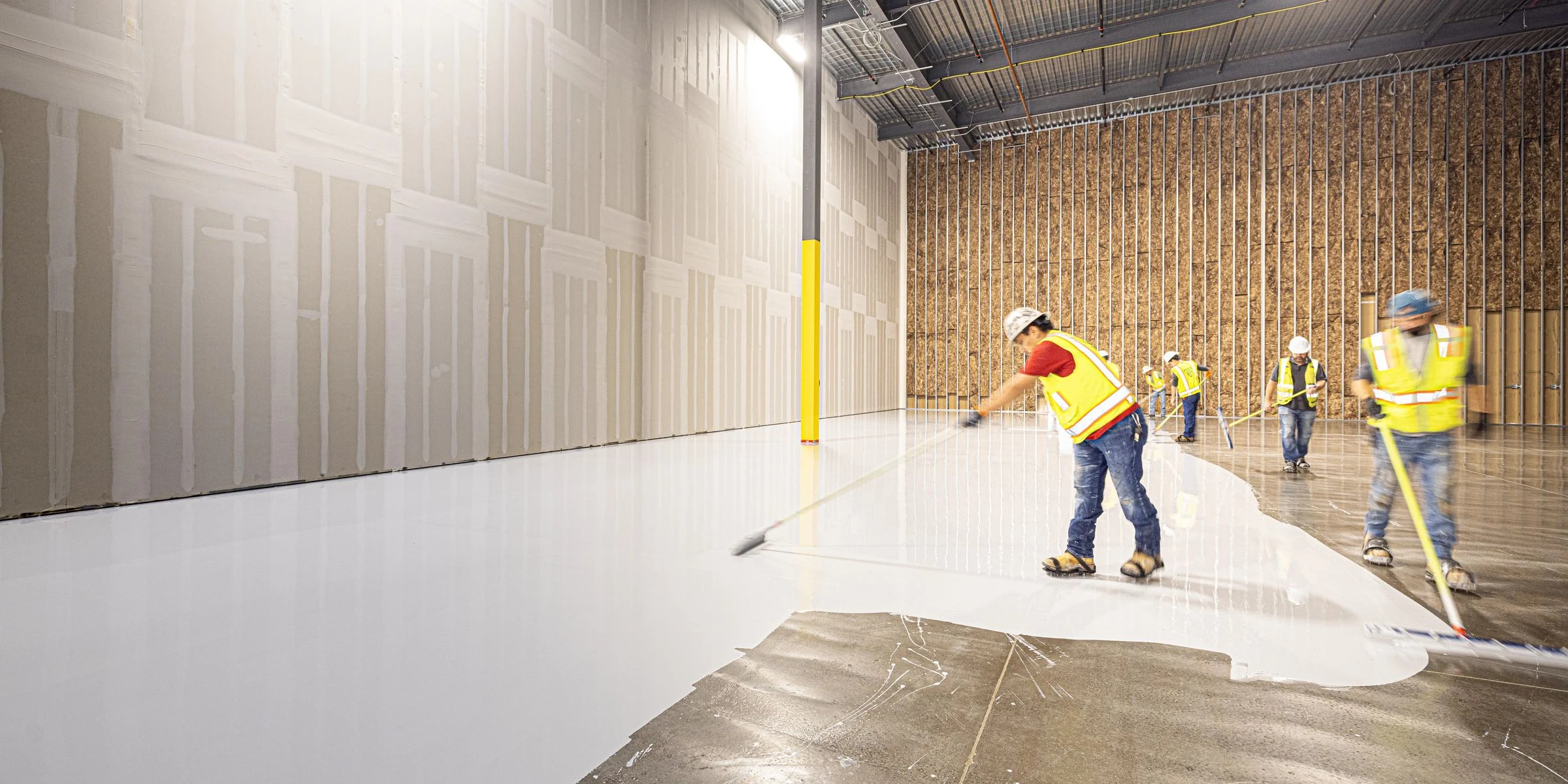
If testing exceeds the intended coating’s limits, stop and choose an appropriate next step. For a suitable slab, that may be a manufacturer-approved topical moisture vapor mitigation system, often a dedicated resin layer beneath the decorative floor. Its own test limits, required concrete surface profile, coverage, thickness and compatibility must all be satisfied.
An ordinary primer is not automatically a vapor-control system. A product described as “moisture tolerant” needs documented suitability for the actual conditions and overlying coatings. Adding extra material or choosing a fast-curing topcoat does not establish moisture protection.
Is that a “vapor shield”?
People use “vapor shield” or “moisture barrier” when asking about this layer. We use the specific term topical moisture vapor mitigation and identify the proposed product in the scope. A product name alone does not explain its limitations.
This is different from an under-slab vapor retarder, installed below the concrete during construction to reduce moisture transmission from the ground. An existing slab may not have one; a topical treatment is not the same construction detail.
When another coating layer is not the answer
Active leaks, recurring wet patches, poor drainage and hydrostatic pressure from water behind or below a surface need investigation. A vapor-mitigation coating is not a blanket waterproofing guarantee against those conditions. The correct plan may be water-source repairs, specialist assessment, more drying time or declining to coat until conditions change.
White mineral deposits, failed old coatings and new concrete are reasons to investigate, not enough information to diagnose the problem by appearance alone.
What should be in your floor-coating plan?
Ask for the test method and results, the proposed system’s limits, any mitigation product and preparation requirements, and what happens if the slab does not qualify. Diamond grinding or shot blasting creates the specified profile; neither method solves an ongoing moisture source. Read the surface-preparation guide and compare the roles of epoxy, polyaspartic and polyurethane.
Technical references
For background, see Sika’s surface-preparation and moisture-testing guidance, ASTM F2170, ASTM F1869, ACI’s discussion of under-slab vapor retarders and LATICRETE’s waterproofing limitations. These references explain the distinctions; the current data sheets for the proposed products control the actual installation.