Budgeting
What actually
drives the cost.
Planning a garage floor budget? Published price ranges can be a useful starting point, but check what they include. Here’s how to describe your project, compare scopes and get a written SlabFresh quote.
Two quotes for the same garage can differ by a lot and both be honest. They can also be identical and describe completely different jobs. This is what sits behind the number.
A budget range and a written quote do different jobs
A published price per square foot can help with early planning. Check whether it assumes bare, sound concrete and whether removal, repairs, moisture treatment, steps and stem walls cost extra. Multiply a range by your approximate floor area only when those assumptions fit your project.
SlabFresh does not currently publish a standard rate. We review the concrete and proposed finish before putting the scope and price in writing. You can request a free consultation to start that conversation; the visit timing is arranged with you.
Three scopes to compare before comparing prices
- Bare garage slab with limited repairs. Ask about preparation, moisture testing, the selected coating system and exactly which edges are included.
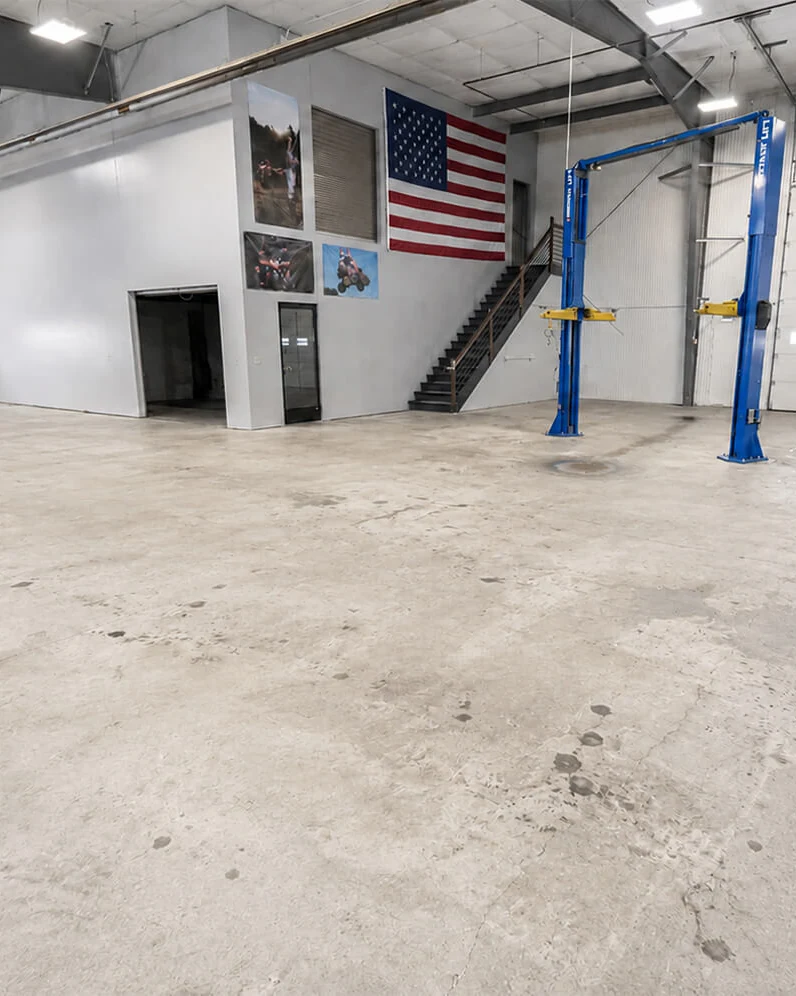
- Garage with an old coating or visible damage. Ask for removal, crack or surface repairs and any testing-dependent work to be identified separately.
- Decorative interior or detailed garage. Compare the chosen finish, transitions, steps, stem walls and access requirements, not just the open floor area.
These are planning examples, not completed SlabFresh projects or fixed-price packages. The actual scope depends on the slab and the system selected.

What to have ready for a useful budget conversation
Have your project city, approximate length and width, intended use and preferred finish ready. If you have photos, include the whole floor and close-ups of cracks, stains or an existing coating when the team follows up. Mention steps, stem walls and whether the space can be cleared.
Not sure about the area or finish? That is fine. Choose “Not sure yet” on the project form and tell us what you know. Photos and measurements help us prepare; they do not replace inspection or testing.
The things that genuinely move the price
How much has to come off first
Bare, sound concrete is the cheap starting point. An old sealer, a DIY epoxy kit, tile adhesive, carpet glue or paint all have to be removed before anything new goes down, and removal can take longer than the coating itself.
The condition of the slab
Cracks, spalling, pitting, old anchor holes and saw cuts all need filling and grinding flush. A handful is routine. A floor that’s comprehensively cracked is a different job.
Moisture
Readings above the selected system’s limits may require approved moisture vapor mitigation, water-source repairs or more drying time. Testing determines whether a coating is suitable at all. Any additional treatment should be explained and priced before the decorative system is installed.
Edges, steps and thresholds
Open floor is fast. Perimeters, stem walls, steps, coved bases and door transitions are all hand work, and they’re where the hours go. A garage with a step down into the house and a stem wall all the way round is meaningfully more work than its square footage suggests.
What you’re asking the floor to do
A single-car garage that stores boxes and a garage that takes a car in and out daily in full sun can justify different systems. Heavier build, better topcoat, more cost — sometimes worth it, sometimes not.
Access
Can the specified grinder or shot blaster and dust collector reach the floor without stairs? Is there power? Somewhere to park? Small logistics, real hours.
How to compare two quotes properly
Put them side by side and check these, not the total:
- Preparation method. Identify diamond grinding, shot blasting or another approved method, and the required concrete surface profile. “Prep included” is not a specification.
- Number of coats and what each one is. A base, a broadcast and a clear is three. “Two-coat epoxy system” is not the same product.
- Broadcast coverage. Full broadcast to rejection, or partial? Partial is cheaper and looks it.
- Is crack repair included, or an extra discovered later?
- Is moisture testing included, and what happens if it fails?
- What’s explicitly excluded. The exclusions list tells you more about a contractor than the inclusions list does.
The cheapest quote is sometimes the right one
A sound, accessible slab that tests within the selected system’s limits may need less repair work. Proper profiling by diamond grinding or shot blasting still matters, even on new concrete, and a lower quote for a genuinely simpler scope can be legitimate.
If one quote is much lower, ask how it handles the old coating, contamination and visible damage. A missing item is a question to resolve before work starts, not proof that the contractor will do poor work.