Inland Empire
Hot tire pickup,
and our summers.
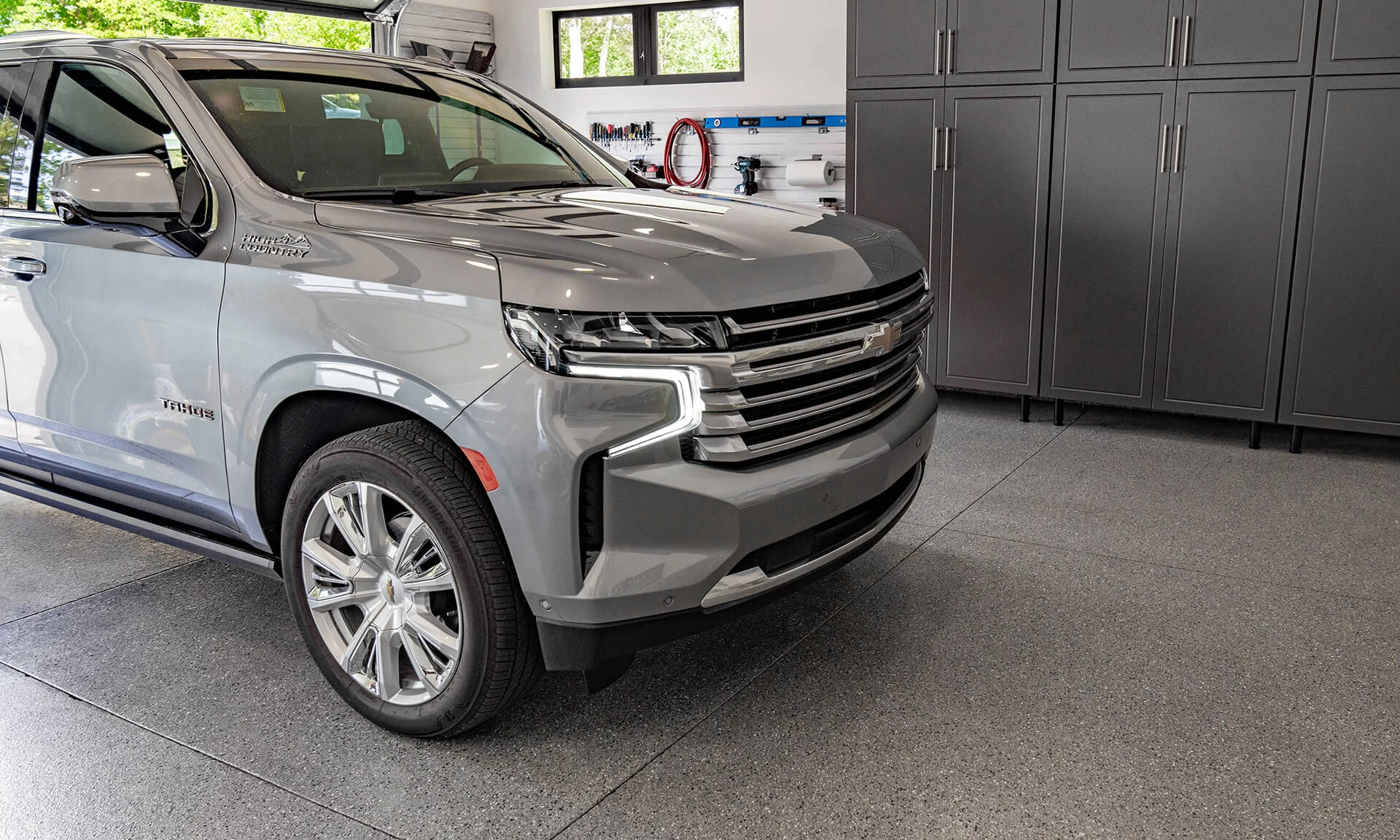
Park a car that has been out in an Inland Empire August and the tire touching your garage floor is a lot hotter than the air. That is the most specific reason coatings fail out here.
Most epoxy advice online is written for a national audience, which means it is written for somewhere with a milder summer than ours. Out here the failure you are most likely to see has a name, and it has almost nothing to do with how heavy your car is.
What hot tire pickup actually is
Drive on a hot day and your tires get hot — well above ambient. Park, and that heat transfers into the coating under the contact patch. The rubber softens slightly. The coating softens slightly. They stick.
Then the tire cools and contracts, and as it shrinks it pulls. If the bond between coating and concrete is weaker than the temporary bond between rubber and coating, the coating loses. You back out a few days later and there is a tire-shaped patch missing from your floor.
It is not abrasion and it is not weight. It is an adhesion problem, and it happens while the car is sitting still.
Why it is worse here than almost anywhere
- Ambient heat. Corona, Riverside and Norco run well over 100°F through summer. Asphalt gets far hotter than that, and so does anything rolling on it.
- Attached, unconditioned garages. A closed garage in July is an oven, and the slab stays warm overnight — so the coating never really firms back up.
- Long drives. Commutes down the 215 and the 15 mean tires arrive home properly heat-soaked, not just warm from a trip to the store.
- Sun through an open door. Most people here leave the door up, and west-facing garages take direct afternoon sun onto the slab.
Together that is a materially harsher environment than the conditions most national coating advice assumes.
What actually prevents it
A real bond, first
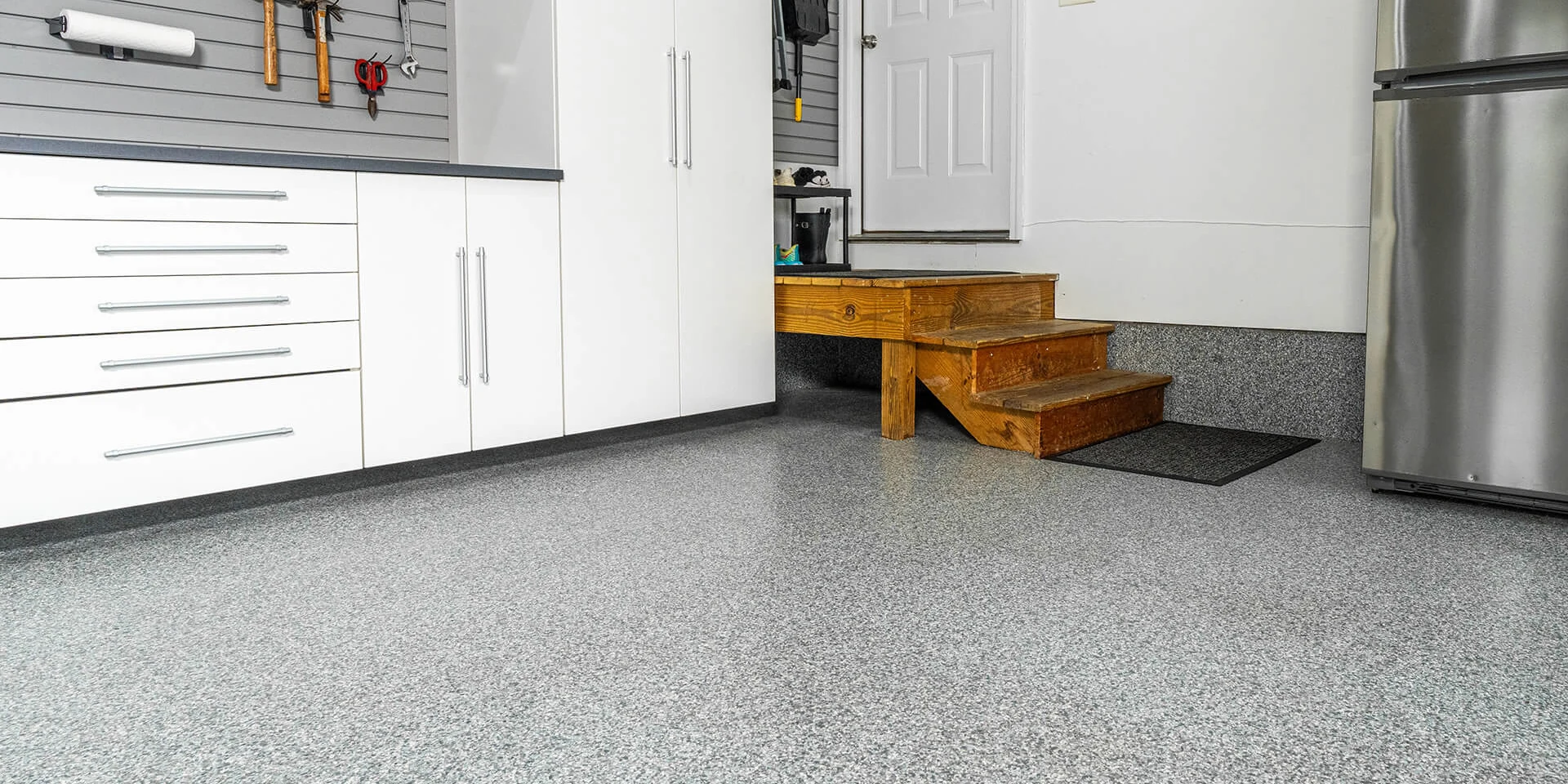
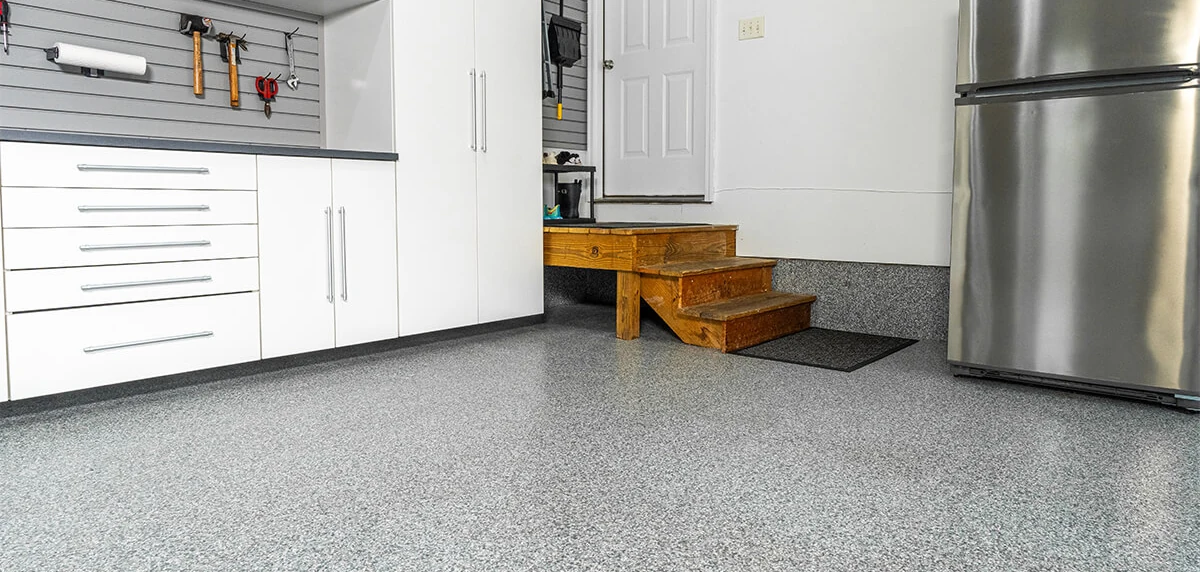
The coating needs sound, clean concrete with the specified surface profile. Diamond grinding or shot blasting may be used to prepare it. Proper preparation reduces an important failure risk, but does not make any coating immune to tire pickup, contamination or incomplete cure. More on that here.
The right topcoat
A compatible polyaspartic or polyurethane topcoat may be part of a garage-floor system. Check the actual product’s tire-mark, heat, chemical and abrasion performance and its vehicle return-to-service instructions. The resin family alone does not guarantee resistance. The comparison in full.
Enough thickness
Apply each layer at its specified coverage and thickness. More material is not automatically better: a complete compatible system, correct application and sufficient cure matter together.
Full cure before the car comes back
The most avoidable version of this failure is parking on a floor that has not finished curing. The coating is still soft, the tire is still hot, and you get a mark on day three of a floor you just paid for. When we give you a drive-on time, this is the reason for it.
What does not fix it
Parking mats under the tires work, but you have just bought a nice floor and covered the part everyone looks at. Letting the car cool on the driveway helps and nobody does it every day. Neither is a substitute for a floor built to take it.
If it has already happened
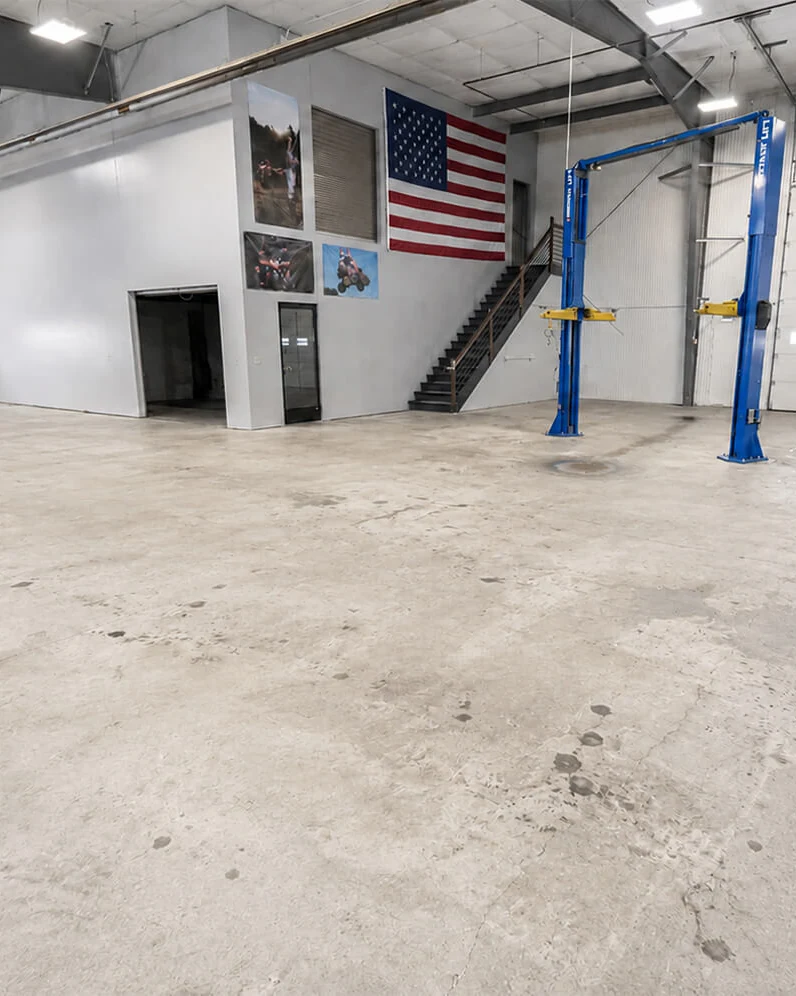
Tire-shaped damage calls for an assessment of the bond, moisture, coating products and cure history. Failed material may need removal by diamond grinding or shot blasting and a properly specified rebuild. Whether local repair or full removal makes sense depends on the findings.
That is a frustrating thing to hear, and it is exactly why we are so particular about prep on the way in.