Aftercare
Living with
the floor.
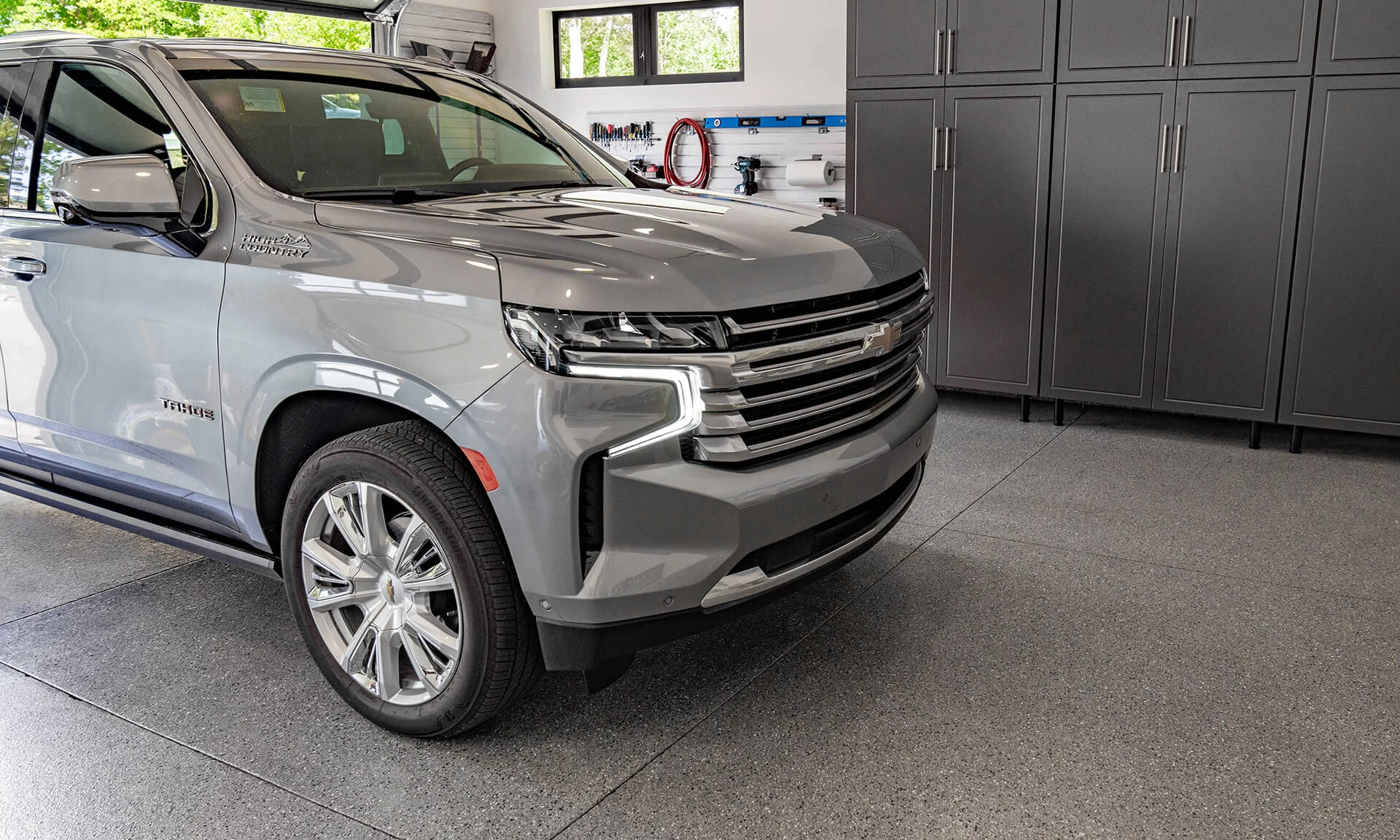
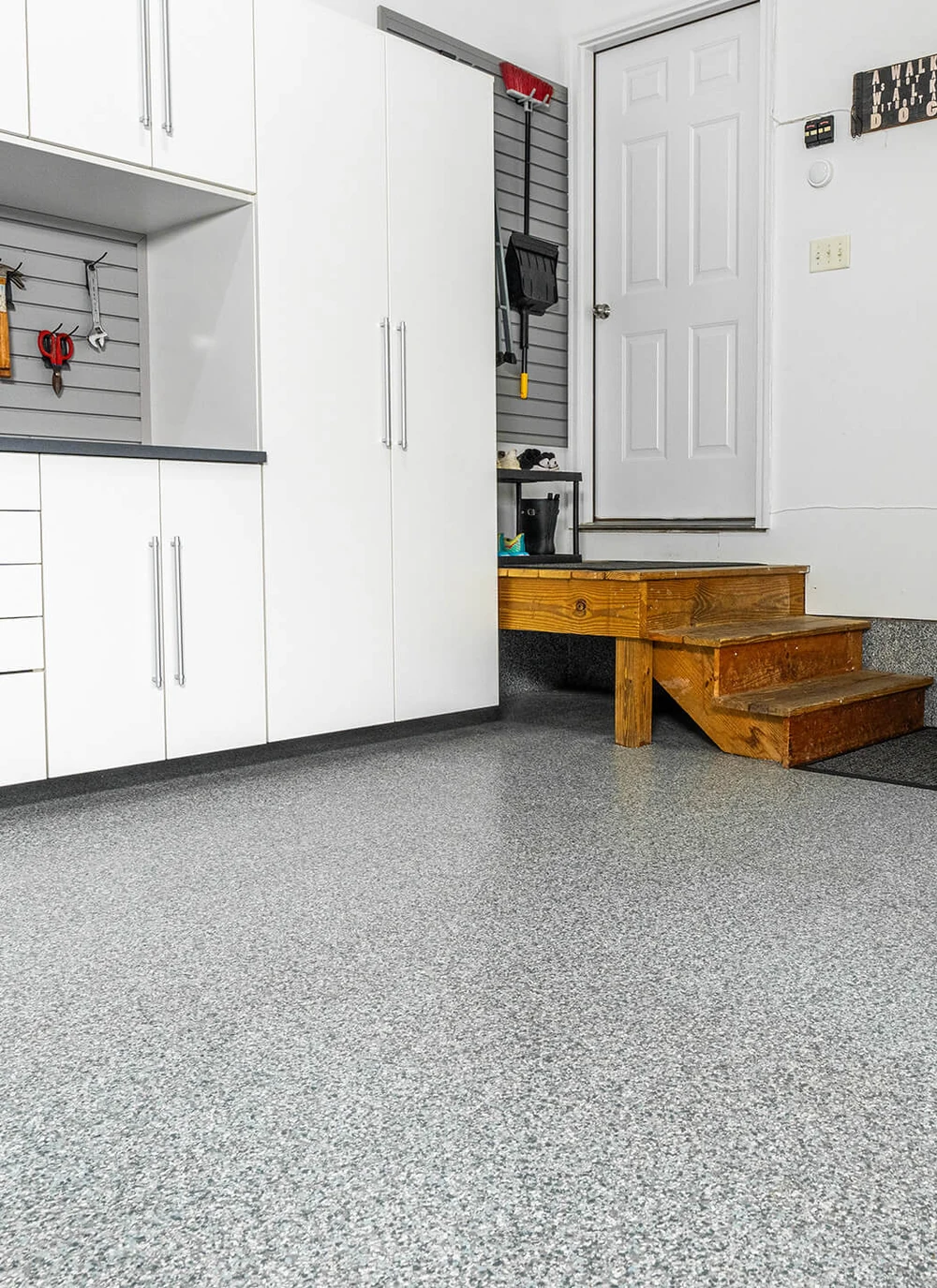
A coated floor is genuinely low-maintenance, which is most of the point. There are about four things worth knowing and two worth actually hurrying for.
The whole reason to coat a garage slab is that bare concrete is porous and holds everything. A sealed floor does not, so cleaning goes from a project to a five-minute job. Here is the realistic version of looking after one.
Routine cleaning
Sweep it, or better, run a dust mop over it. Most of what accumulates in a garage is dry grit tracked in off the driveway, and grit underfoot is the main thing that dulls a gloss finish over time.
For an actual clean: warm water, a pH-neutral floor cleaner, soft mop. That is it. You do not need anything aggressive, and aggressive is usually worse.
What to avoid
- Anything acidic or strongly alkaline — citrus cleaners, vinegar, degreasers meant for engine parts. They dull the topcoat over time.
- Steel wool and abrasive pads. A soft nylon brush handles anything a pad would.
- Rubber-backed mats left down for months. Some rubber compounds react with coatings and leave a stain that will not come out. If you use mats, move them occasionally.
- Dragging metal. Toolboxes, jack stands and floor jacks dragged rather than lifted are the most common source of scratches on an otherwise fine floor.
The two spills worth hurrying for
Most things — oil, coolant, mud, paint — can sit a while and wipe up fine, which is the entire advantage over bare concrete.
The exceptions are brake fluid and battery acid. Both will attack a coating if left, and both are worth getting up straight away with water and a rag. If you are bleeding brakes, put something down first.
Jack stands and heavy point loads
A coating handles vehicle weight spread over four tires without complaint. What it does not love is the corner of a car on a jack stand with a small steel foot — a very high load over a very small area, which can leave an indent.
A square of plywood or a rubber puck under each stand solves it completely. Same for engine hoists and anything else that concentrates weight into a point.
Sun, if your door stays open
Where sunlight reaches the floor, choose a compatible topcoat with documented UV performance. Polyaspartic and aliphatic polyurethane options vary by formulation, and a clear topcoat does not automatically prevent color change in underlying layers. Follow the specified system’s exposure and maintenance guidance rather than assuming gloss and color will never change.
Scratches and touch-ups
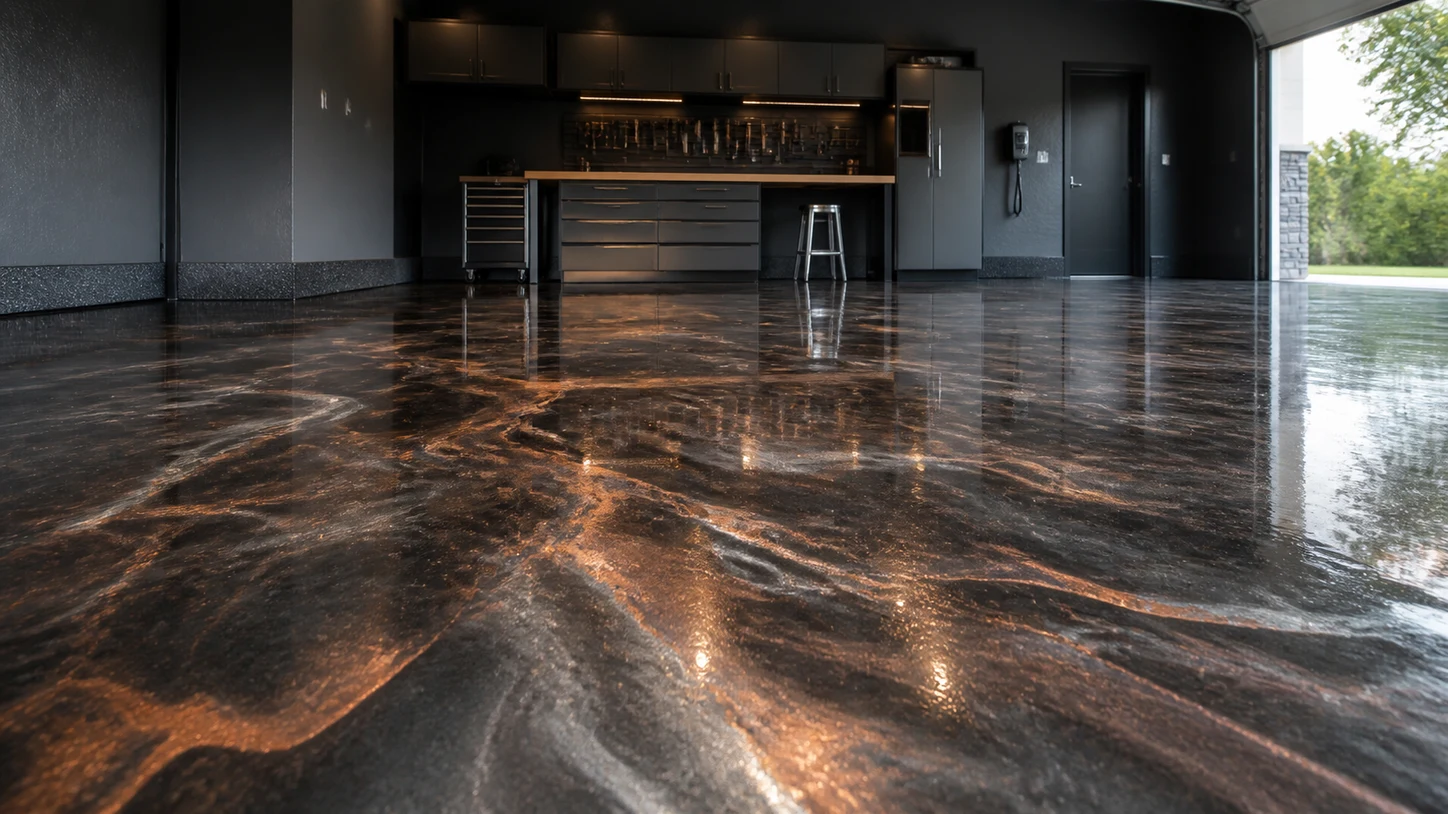
Light scuffs often disappear with a clean — a lot of what looks like a scratch is transferred rubber or metal sitting on the surface, not damage to it.
Real damage through the topcoat is repairable, and flake floors hide repairs extremely well. Call us rather than spot-fixing with a hardware-store product; mismatched chemistry causes more problems than the original scratch.
The short version
- Dust mop regularly, damp mop occasionally, neutral cleaner only.
- Wipe brake fluid and battery acid immediately. Everything else can wait.
- Put something under jack stands.
- Lift heavy metal instead of dragging it.
That is genuinely the whole list.